
Have you ever wondered how plants can grow without soil? Welcome to the fascinating world of hydroponics, a modern farming method that lets you grow vegetables, herbs, and even fruits using only water and nutrients. With hydroponics, plants grow faster, use less water, and can thrive indoors or in small spaces, making it one of the most sustainable ways to farm in the 21st century.
In this article, we’ll explain what hydroponics is in simple terms, discuss whether it’s better than soil, and explore how long it takes for hydroponic plants to grow. Whether you’re a curious beginner or someone considering starting a small indoor garden, this guide will help you understand how hydroponics works and why it’s becoming so popular around the world.
What is Hydroponics in Simple Terms?
Hydroponics is a method of growing plants without using soil. Instead of getting nutrients from dirt, plants grow in water enriched with minerals and nutrients. The roots sit directly in a nutrient-rich solution or in a soilless medium such as coconut coir, perlite, or clay pebbles.
Think of hydroponics as feeding plants directly through their water instead of relying on soil to deliver nutrients. Since the nutrients go straight to the roots, plants can grow more efficiently and often faster.
In a typical hydroponic setup:
- The roots of the plants are suspended in a nutrient solution or supported by a medium that holds moisture.
- Water pumps circulate the nutrients so the plants always have enough oxygen and minerals.
- Grow lights or natural sunlight provide the energy plants need for photosynthesis.
It’s like giving your plants a constant buffet of everything they need: water, oxygen, and nutrients, all carefully balanced.
How Does Hydroponics Work?
Hydroponic systems can look quite different depending on how they’re designed, but they all rely on the same basic principle: nutrient-rich water directly feeds the roots.
Here are some popular hydroponic systems:
- Deep Water Culture (DWC) – The plants sit in a reservoir filled with nutrient solution. An air pump provides oxygen to the roots.
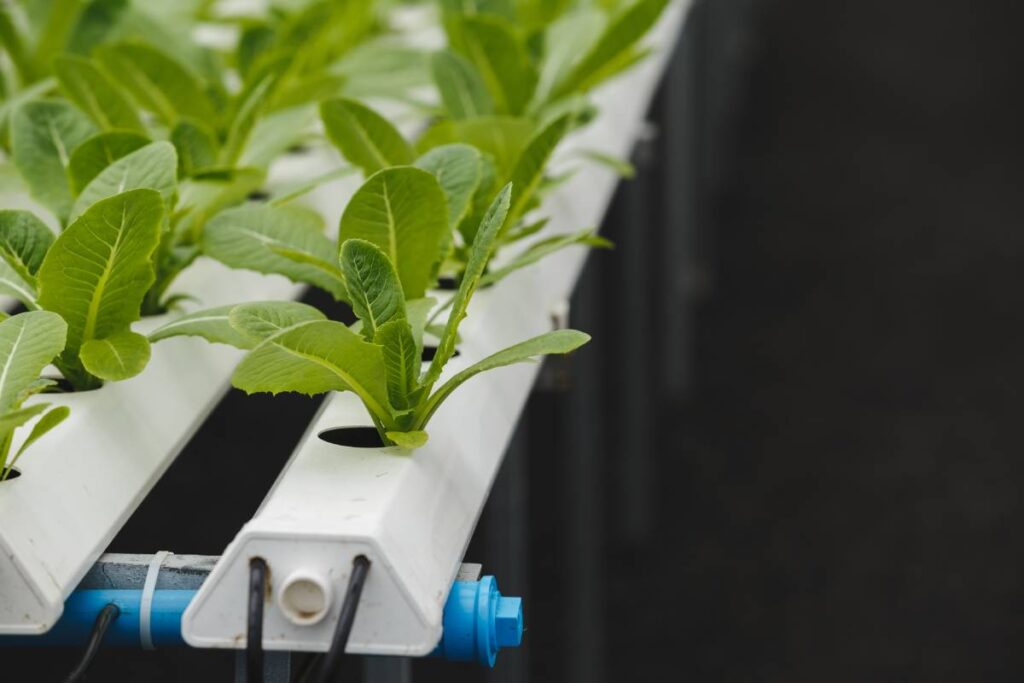
- Nutrient Film Technique (NFT) – A thin film of nutrient water continuously flows over the roots, giving constant nourishment.
- Drip System – Nutrient solution is dripped onto the base of each plant, and the excess drains back into a reservoir.
- Ebb and Flow (Flood and Drain) – The roots are flooded with nutrient water at intervals, then drained to let them breathe.
- Aeroponics – Roots are misted with nutrient water instead of being submerged, allowing for maximum oxygen exposure.
Each system has its pros and cons, but all of them share one key advantage: complete control over the plant’s environment.
Is Hydroponics Better Than Soil?
This is one of the biggest debates among gardeners, farmers, and sustainability experts. To answer it, we need to look at the advantages and disadvantages of hydroponics compared to traditional soil-based growing.
Advantages of Hydroponics
- Faster Growth
- Plants grown hydroponically often grow 30–50% faster than soil-grown plants.
- That’s because the nutrients are directly available to the roots, and there’s no need for the plant to “search” for food in the soil.
- Higher Yields
- Because hydroponic systems can be stacked vertically or arranged in dense layouts, they often produce more crops per square meter than soil farming.
- Indoor vertical farms use hydroponics to grow large amounts of produce in small spaces.
- Water Efficiency
- Hydroponics uses up to 90% less water than soil-based agriculture.
- The water in hydroponic systems is recycled; any unused water is collected and reused instead of being lost through evaporation or runoff.
- No Weeds or Pests
- Since there’s no soil, you don’t have to worry about weeds taking over or soil-borne pests harming your plants.
- This also means fewer pesticides are needed, making hydroponics safer and cleaner.
- Year-Round Growing
- Hydroponic systems can be used indoors or in greenhouses, allowing year-round production regardless of weather conditions.
- This makes it ideal for urban areas or places with poor soil quality.
- Cleaner and Easier Maintenance
- No dirt means less mess. You can grow plants on a balcony, in a garage, or even in your kitchen with compact hydroponic kits.
- It’s also an excellent way to keep seeds and young plants healthy while preparing for larger soil or outdoor planting later.
Disadvantages of Hydroponics
- Higher Setup Cost
- Building a hydroponic system requires equipment such as water pumps, lights, reservoirs, and nutrient solutions.
- This makes the initial cost higher than soil gardening.
- Technical Knowledge
- Managing water pH, nutrient balance, and oxygen levels requires more monitoring than soil gardening.
- A small mistake, like a pump failure, can harm plants quickly since they rely entirely on the nutrient system.
- Power Dependency
- Most systems rely on electricity for pumps and lights. Power outages can interrupt the growing process.
- Not Ideal for All Crops
- Some root vegetables (like potatoes or carrots) don’t perform as well in hydroponics compared to leafy greens or herbs.
Which is Better Overall?
The answer depends on your goals.
If you want:
- Speed, efficiency, and year-round yields, hydroponics is better.
- Low-cost, low-maintenance, and natural outdoor gardening, soil still has its place.
For commercial growers and urban farmers, hydroponics offers control, scalability, and sustainability.
For home gardeners who enjoy the natural feel of soil and sunshine, traditional growing remains rewarding and simpler.
How Long Does Hydroponics Take to Grow?
One of the most exciting aspects of hydroponics is how quickly plants grow compared to soil.
Because the nutrients and water are directly available to the roots, hydroponic plants don’t waste energy developing deep root systems. Instead, they focus on leaf and fruit growth.
Here’s a general comparison:
| Crop Type | Hydroponic Growth Time | Soil Growth Time |
| Lettuce | 30 days | 45–60 days |
| Spinach | 35 days | 50 days |
| Basil | 25–30 days | 45–50 days |
| Strawberries | 60–90 days | 90–120 days |
| Tomatoes | 8–10 weeks | 10–12 weeks |
| Peppers | 10–12 weeks | 14–18 weeks |
These numbers vary depending on light, temperature, and the specific hydroponic setup. But on average, hydroponics allows plants to mature 25–50% faster.
What Makes Hydroponics Grow Faster?
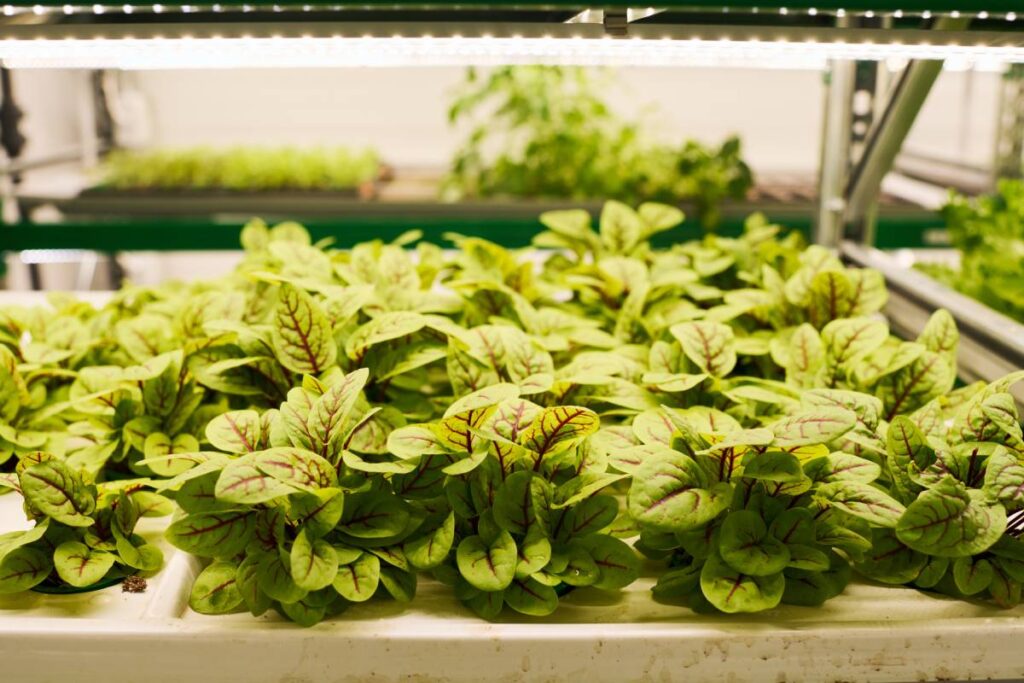
There are a few scientific reasons hydroponics speeds up plant growth:
- Direct Nutrient Delivery
- In soil, plants must extend their roots to find nutrients. In hydroponics, the roots get exactly what they need right away.
- Better Oxygen Supply
- Oxygenated water allows roots to absorb nutrients more efficiently, stimulating faster cell growth.
- Controlled Environment
- No droughts, no floods, no temperature swings, plants grow in an ideal environment 24/7.
- Consistent Light Exposure
- With LED grow lights, plants receive optimal light intensity and spectrum, ensuring steady photosynthesis day and night.
- No Competition for Nutrients
- In soil, roots may compete for nutrients or face imbalances. Hydroponics gives every plant its fair share of minerals.
What Can You Grow with Hydroponics?
Hydroponics is incredibly versatile. While it’s most popular for leafy greens, it can support a wide variety of crops:
- Leafy Greens: Lettuce, spinach, kale, Swiss chard
- Herbs: Basil, mint, parsley, dill, oregano
- Fruits: Strawberries, tomatoes, peppers, cucumbers
- Flowers: Orchids, roses, marigolds
Even some small root vegetables like radishes can thrive in hydroponic systems if designed properly.
How Much Space Does Hydroponics Need?
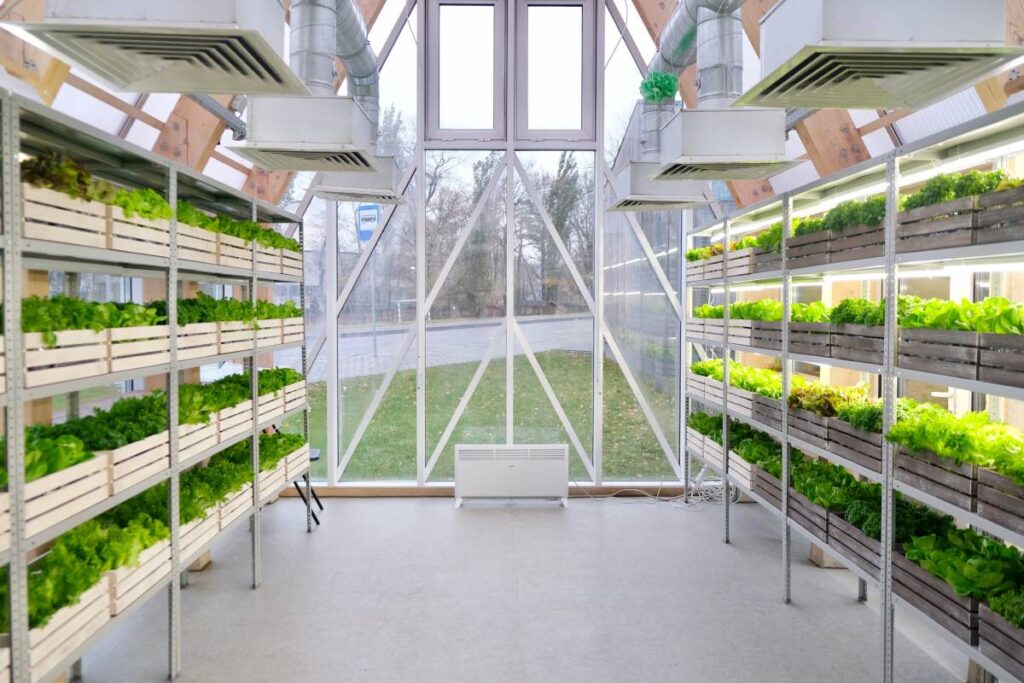
One of the biggest benefits of hydroponics is that it’s space-efficient.
You can set up a small hydroponic garden in:
- A kitchen countertop (using a mini hydroponic kit)
- A small balcony
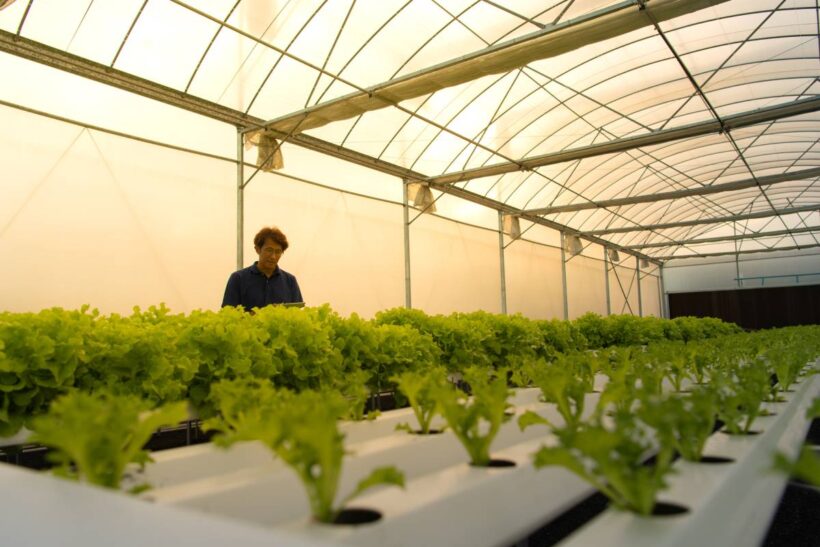
- A greenhouse or a garden
- Or even vertical racks for large-scale farming
This makes it perfect for urban living or regions with limited arable land.
Is Hydroponics Sustainable?
Yes, in many ways, hydroponics is more sustainable than traditional farming.
Here’s why:
- It saves water by recycling nutrient solutions.
- It reduces pesticide use since there’s no soil for pests to thrive in.
- It minimises land use, making it ideal for cities.
- It allows local food production, cutting down on transport emissions.
However, sustainability also depends on how it’s powered.
Using renewable energy (like solar panels) for lighting and pumps can make hydroponic farms virtually carbon-neutral.
Getting Started with Hydroponics at Home
If you’re curious to try hydroponics, you don’t need a commercial setup.
Here’s a simple starter plan:
- Pick Easy Plants – Lettuce, basil, or spinach are great beginner’s crops.
- Choose a System – Start with a simple Deep Water Culture (DWC) or wick system.
- Buy Nutrients and pH Tools – You’ll need hydroponic nutrient solution and a pH tester to keep the balance right.
- Provide Light – Place near a sunny window or use LED grow lights.
- Monitor and Adjust – Check water levels and nutrient balance weekly.
Within a few weeks, you’ll have your first harvest, no soil, no mess, and plenty of satisfaction.
Final Thoughts
Hydroponics is changing the way we think about growing food. By replacing soil with water and nutrients, it creates a faster, cleaner, and more efficient growing method that works anywhere from city apartments to large-scale farms.
So, to sum it all up:
- What is hydroponics? A soil-free growing system that uses nutrient-rich water.
- Is hydroponics better than soil? In many ways, yes — it’s faster, cleaner, and more space-efficient.
- How long does hydroponics take to grow? Usually 25–50% faster than soil-grown plants.
Whether you’re looking to grow fresh lettuce in your kitchen or start a sustainable farm, hydroponics might just be the future of farming.

 The Labyrinth Garden